
Surrounded by scandal when it was first staged in 1879, ‘A Doll’s House’ now serves as a timely reminder of how far our society has come in 150 years towards recognising women’s right to be treated as equal citizens. For a modern audience it is quite disturbing to be transported into the life of Nora Helmer, and we are enveloped in her world, and her home, before the play even starts: the open set, making use of the raised stage area as well as a floor level set, gives us a real feel of a nineteenth century upper middle class home, with drawing room and unusually the study, hall and front door too, allowing us to witness the comings and goings and normal bustle of the household. Indeed, before the opening scene we see the maid Helene, played with superb understatement by Anne Walpole, tidying up, making up the fire in the stove and arranging Christmas presents under the brightly lit (‘candles’ of course) Christmas tree.
But if it looks like something out of a cosy Victorian Christmas tale, we soon sense the underlying tension. Like their home, the marriage of Nora and Torvald has a veneer of happiness and affection, but Torvald’s constant belittling of his wife – teasing her for spending his money on Christmas gifts, calling her his little bird, squirrel and treating her as a child – clearly grates on Nora, and on the modern audience member. Ironically, it may be easier for a contemporary actor to gain sympathy for Nora than 150 years ago.
This is not to say that Nora is an easy role to play – indeed, she is a complex character, with her own flaws and secrets, as we find out along the way. Rebecca Lennon does a magnificent job of creating a believable and empathetic Nora: as well as her emotive delivery of key lines, her body language speaks to us and engages our sympathy throughout the play. Mention must be made too of the demands of the character in terms of number of lines to learn and her presence on stage through almost the whole play.
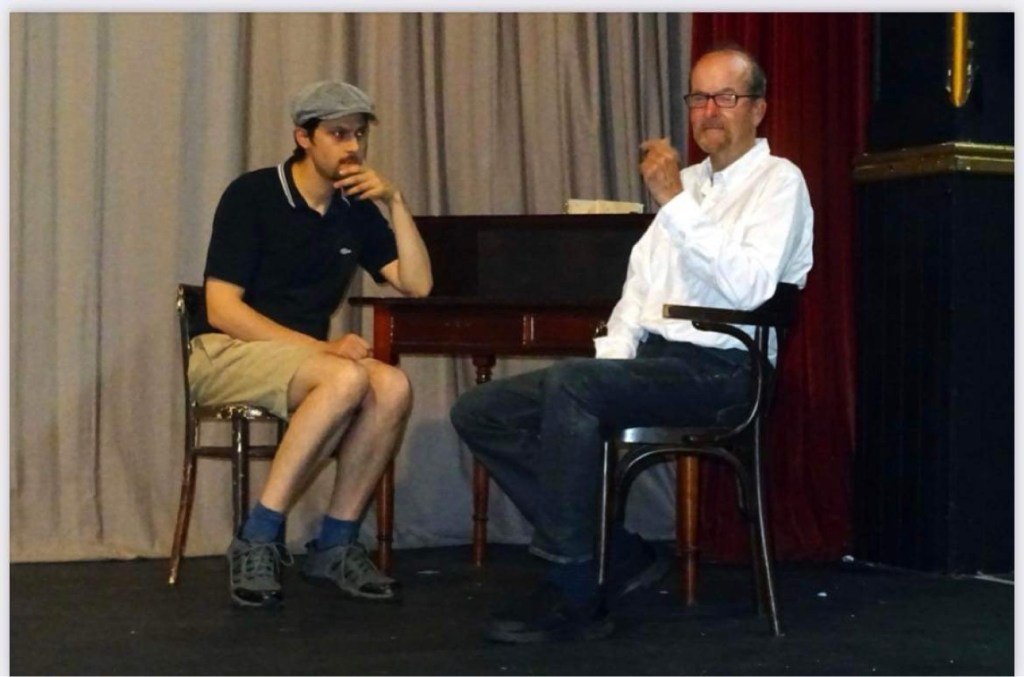
Kevin Wilson is her perfect foil: while Nora paces and twitters, sometimes deliberately acting silly, sometimes overwhelmed by the situations she faces, Kevin’s Torvald is staid, still and superior. The experience of the actor is evident as he presents us with a man wholly convinced that his role in the marriage is to protect and instruct his innocent wife, benignly giving in to some of her fancies but completely in charge of his home and family; this makes the denouement in which he discovers her secrets and her real feelings about him and their marriage all the more dramatic.
One of those secrets is shared with the sinister Krogstad, an employee at the bank which has just promoted Torvald to manager. Krogstad fears – correctly – that he is about to lose his job and comes to ask Nora to plead for him to her husband. When she refuses he reminds her that she not only owes him money which he lent her to take Torvald to Italy for his health, but uses a forged signature on the contract to blackmail her. Philip Barker encapsulates Krogstad’s harsh, unfeeling attitude excellently – but as it turns out, he has his own past which is about to catch up with him.
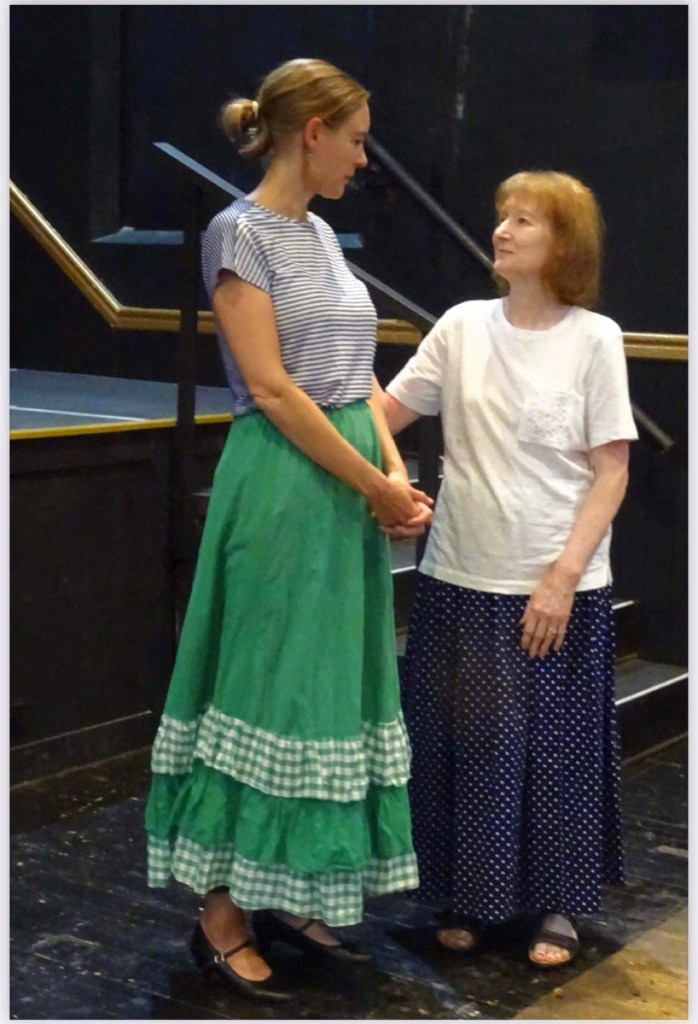
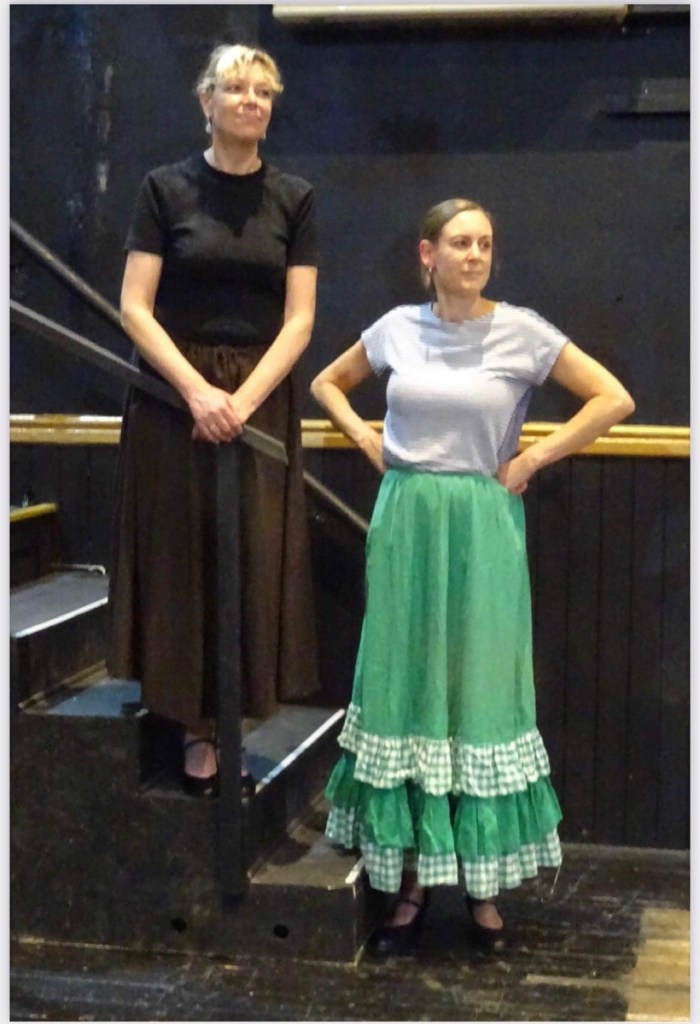
Nora’s friend Kristine has had a hard life too, and now her responsibilities to her family and husband are no more, feeling life is empty, she comes to ask Nora whether Torvald might have a job for her. When the job her husband seems happy to offer to Kristine proves to be Krogstad’s, Nora is thrown into panic – she cannot let her husband find out about the debt she incurred behind his back – apart from anything else, at that time it was illegal for a married woman to borrow money without her husband’s consent.
Nessa Law is perfectly cast as Kristine: she skilfully depicts the character’s surface cheer masking the sadness of an empty marriage, family burdens and a broken life. And when Kristine sees Krogstad she is reminded of the possible happiness she turned away. Having agreed to help Nora, she reminds Krogstad of their past relationship and persuades him to return the contract to Nora rather than blackmail her.
Supporting cast include family friend Dr Rank, played by Martin Stanley who depicts the old man’s physical frailty well, and nursemaid Anne-Marie, a delightful cameo by Carolyn Ferguson. Unlike most productions of A Doll’s House’ this one does not bring Nora’s children on to the stage, but nothing is lost by this: the point is made, as Nora says towards the end of the play, that she has been treated as a doll, a plaything, by her father and then ‘given to’ her husband who treats her in the same way. The birdcage opening at the end is pleasingly symbolic, and the play gives us much to think about, reflecting that what was the norm 150 years ago would now be rightly regarded as an abusive marriage.
Congratulations to director Amanda Robertson for bringing this classic yet still relevant play to the stage at Trinity Theatre and providing an entertaining evening and so much food for thought.

 IWtheatre