
Arthur Miller’s The Crucible is a weighty play—both in subject and execution—but when handled well, it becomes a powerful exploration of integrity, faith, and hysteria. Ryde School’s production proved that, in the right hands, this classic can still grip an audience with fresh intensity and thoughtfulness.
It would be easy to fall into the familiar trap of presenting The Crucible solely as an allegory for McCarthyism, leaning into melodrama and over-the-top “witchy” theatrics. Lesser companies might have taken that route, but Ryde School’s production was far more nuanced. This was a carefully considered, well-directed interpretation that placed weight on the deeper themes Miller weaves throughout his script: What is a man’s name worth? What does it truly mean to be a good Christian?
A particularly compelling thread was the focus on the Ten Commandments—most memorably, John Proctor’s inability to recall them all. Yet Miller ensures we see that it is not just Proctor who falters; the entire community, in one way or another, breaks these sacred laws—whether through coveting, false witness, theft, or neglecting the Sabbath. This production subtly underscored that hypocrisy, offering a sharp commentary on selective morality.
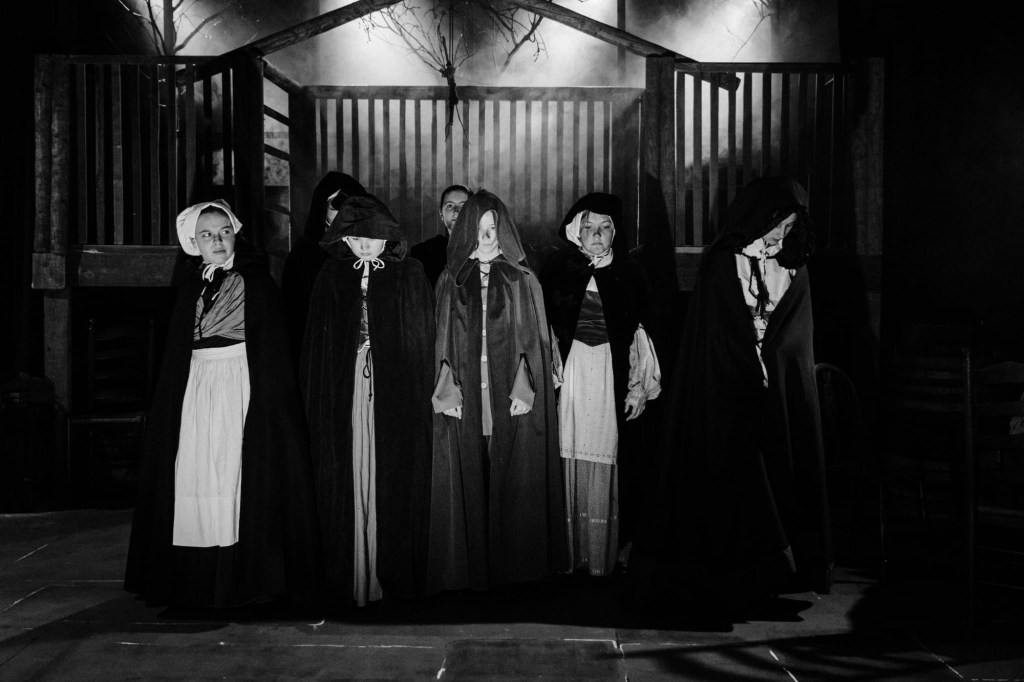
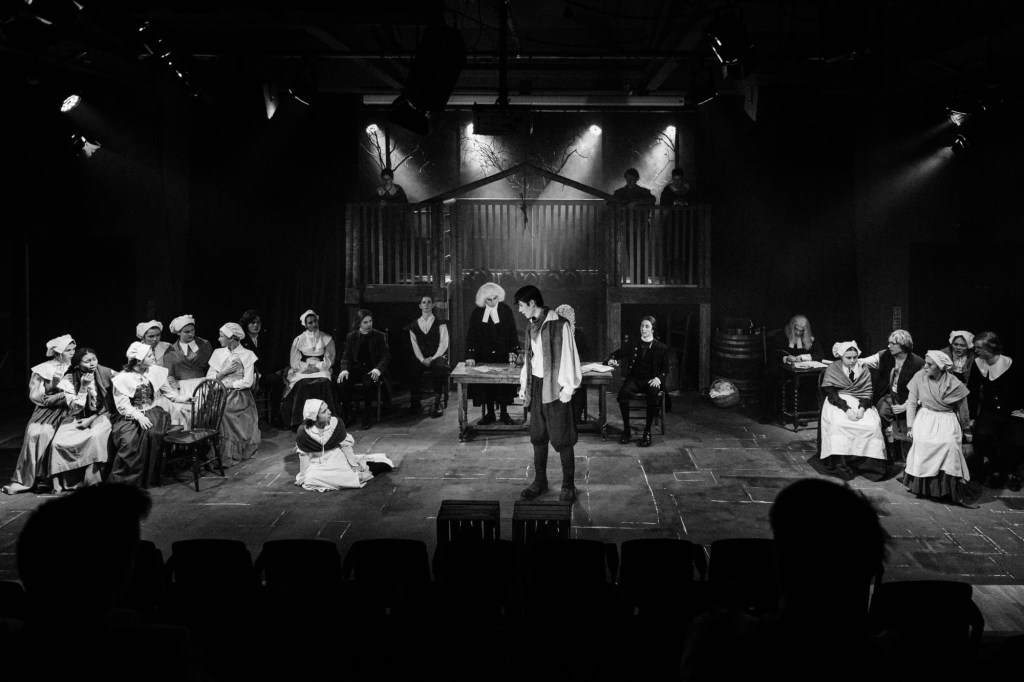
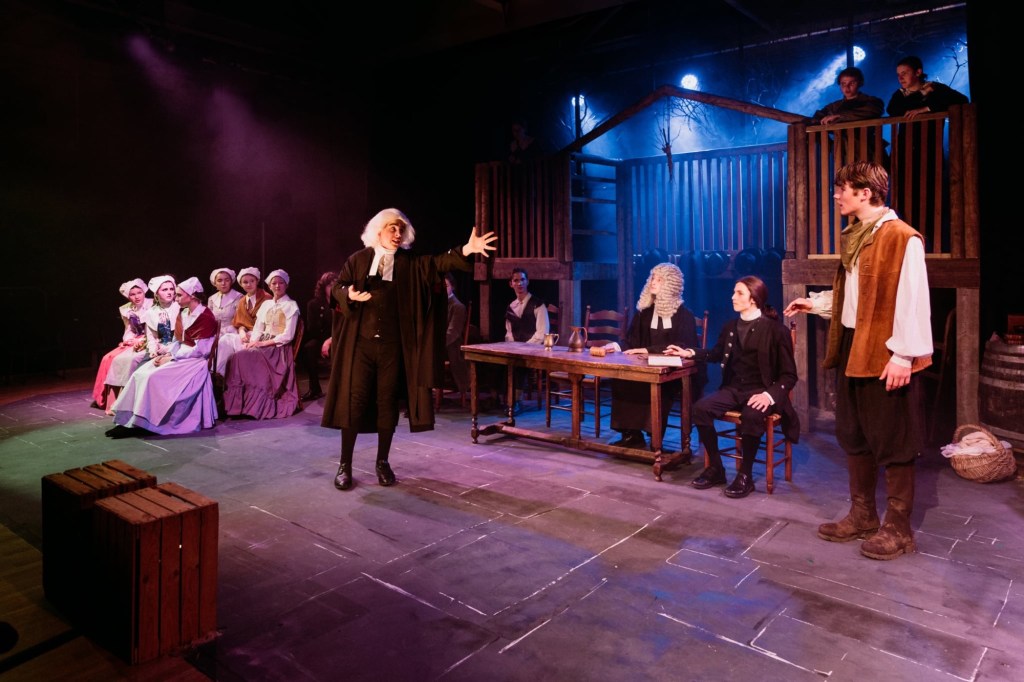
Visually, the staging was simple yet striking. The period-appropriate set design evoked an eerie authenticity, with one particularly unsettling detail: a “poppet” hanging ominously throughout the performance. Was it a harbinger of doom? A representation of ever-present evil? A chilling foreshadowing? Whatever its purpose, it served as an unsettling visual anchor for the tension that built steadily throughout the play.
And tension there was—”tension you could chew,” as the saying goes. The stark stage and moody lighting created an oppressive atmosphere, heightening the emotional weight of the performances. Nowhere was this more evident than in the court scene, a breathtaking display of intensity that had audience members physically recoiling. The silence that followed was almost deafening—an unspoken testament to the actors’ ability to sustain such raw emotion and high energy under unrelenting scrutiny.
At the heart of the production was Toby Green as John Proctor, capturing the character’s frustration and internal turmoil with remarkable depth. His physicality was particularly striking—so much so that at times, one almost wished Proctor could simply fight his way out of the madness surrounding him. Opposite him, Lucie Dartigues delivered a thoroughly unsettling performance as Abigail Williams, her manipulative presence making her a character the audience could not help but despise. Dartigues commanded the stage with confidence, embodying Abigail’s dangerous mix of charm and malice.
Emily Chalmers portrayed Elizabeth Proctor with an impressive emotional arc, transitioning from cold, wounded detachment to a broken woman in the devastating conclusion. Another standout was Hamish Barrett as Deputy Governor Danforth, whose portrayal of law, order, and rigid morality created palpable frustration among the audience. The dramatic irony—our knowledge of the characters’ innocence while Danforth remains unshaken in his authority—made for excruciating viewing.
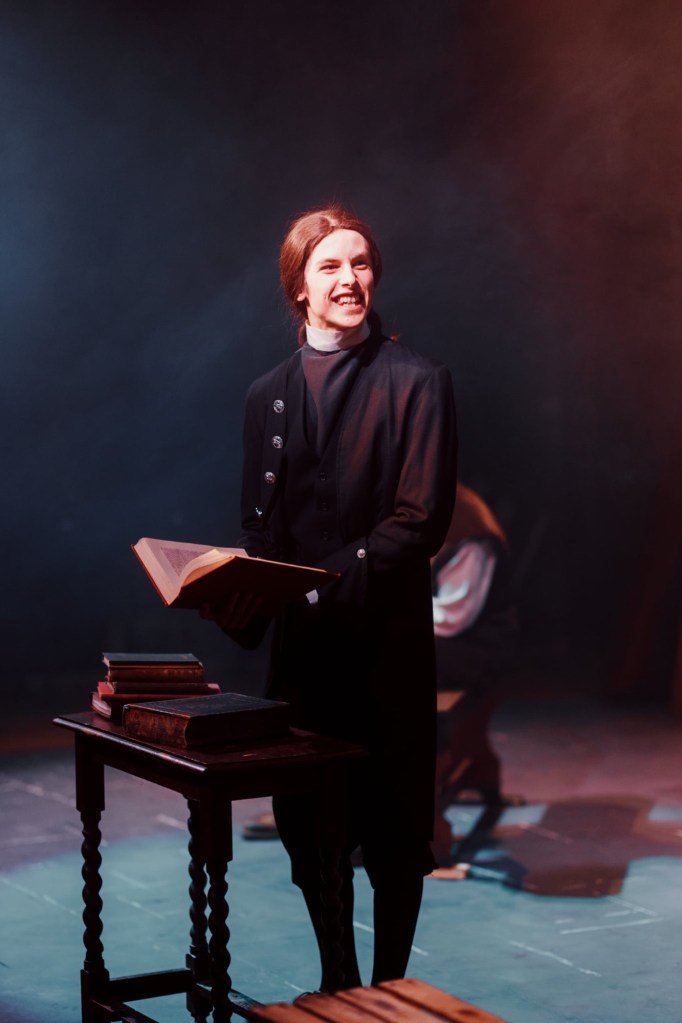
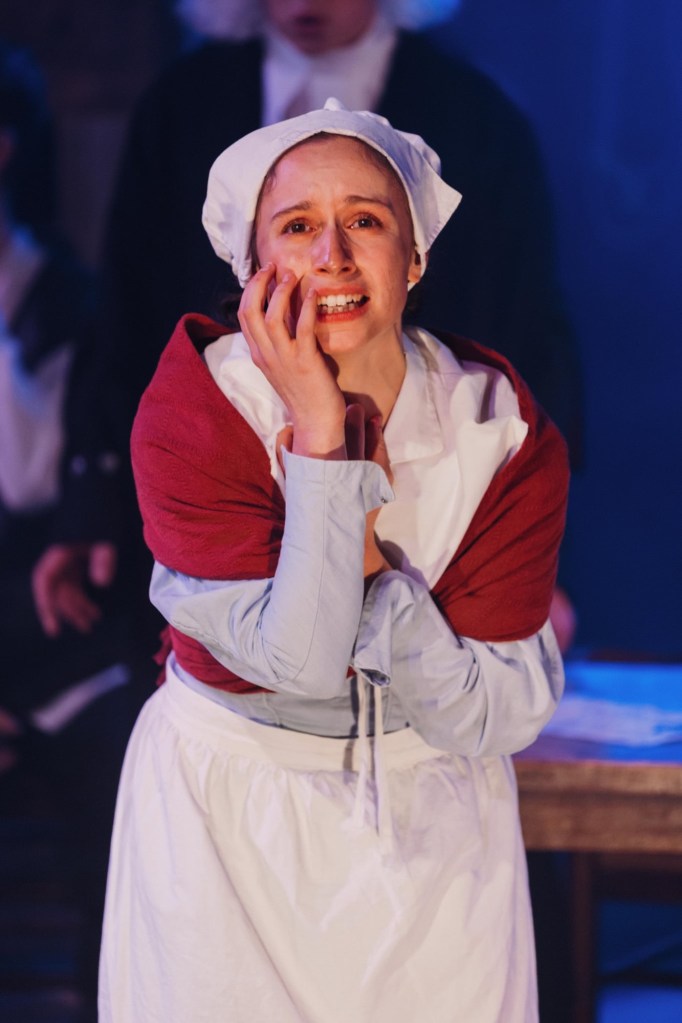
Leonardo Jones shone as Reverend Hale, delivering one of the most compelling character journeys in the play. From his early arrogance and suspicion to his heart-wrenching realization of the truth, Jones brought depth and complexity to the role. His final, desperate pleas were nothing short of goosebump-inducing.
Henry Walker gave a strong performance as Reverend Parris, balancing religious fervour with personal ambition, while Crystal Lee’s portrayal of Tituba was both mysterious and deeply sympathetic, sustaining an impressive accent throughout. Jess Stevens brought maturity to the role of Mary Warren, capturing the character’s gradual unravelling—first as she turns against her friends, then as the mob turns on her in return.
The strength of this production extended beyond the leads, with a cohesive ensemble cast that worked seamlessly together. Luca convincingly portrayed the cynical village elder Giles Corey, while Aoife embodied Goodwife Putnam, swept up in the hysteria. George gave depth to Thomas Putnam, subtly hinting at his ulterior motives. Zoe’s final, chilling line—“I haven’t yet had breakfast”—lingered hauntingly. Flynn as Herrick and Oliver as the gavel-banging judge added weight to the courtroom scenes. The supporting cast, including Ava, Lucy, Daisy, Tobin, Felix, Isabelle, Ruby, Tallulah, Maisie, Arianawen, Siena, Peter, and Rose, brought energy and presence, particularly in the overlapping, chaotic crowd scenes that immersed the audience in the village’s collective frenzy.
This was a production without weak links. Each performer contributed to a gripping, immersive experience, making the audience feel as though they were part of Salem’s madness. The ambition of tackling such a challenging play was rewarded in full—evidenced by the audience leaping to their feet at the final blackout. Ryde School’s The Crucible was not just a student production; it was unforgettable. Well done!
 IWtheatre