
The Apollo Theatre is currently playing host to a brave and uniquely staged adaptation of Mark Haddon’s “The Curious Incident of the Dog in the Night-Time”.
Already a best-selling book from 2003, it was given the stage treatment in the mid 2010’s and tells the story of Christopher Boone, who witnesses the death of his neighbour’s dog, and takes it upon himself to try and find who killed it.
The play then opens up into not only a touching family drama, but an exploration of difference as we see the whole play through the unique perspective of a neurodivergent teenager, one whose logical and rhythm-based worldview often brings him into conflict with the cast of characters that populate his world.
Despite the controversial stories of the lack of research Haddon had done before writing the book, as well as the overall vagueness of Christopher’s diagnosis that the play quietly does not address, the resulting play I saw last night worked as a story of a family learning to communicate and heal.
This was done even through the non-typical lens of a neurotypical family interacting with their autistic son, with a touching amount of sensitivity and truth from the actors on stage.
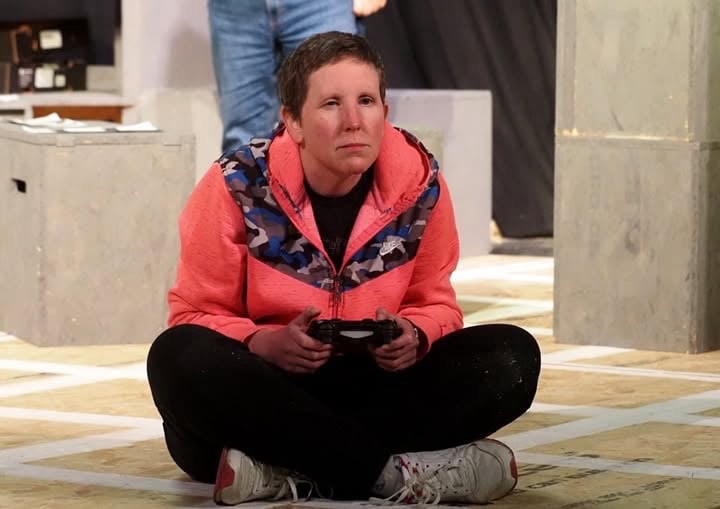
Abbi Leverton not only delivered a metric tonne of dialogue and facts with aplomb, but also showed us Christopher’s underlying passion and want to feel safe, validated and loved despite the fact he cannot express this. In the hands of a less skilled actor, this could have ended disastrously, but they deserve every commendation the audience were giving after the show.
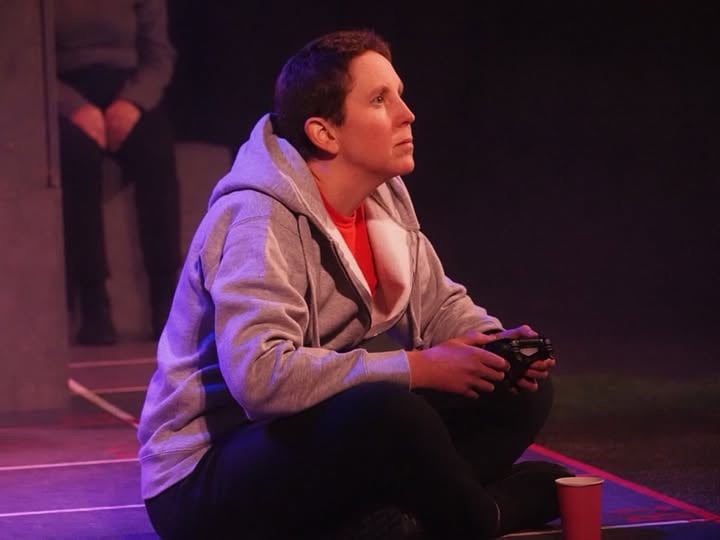
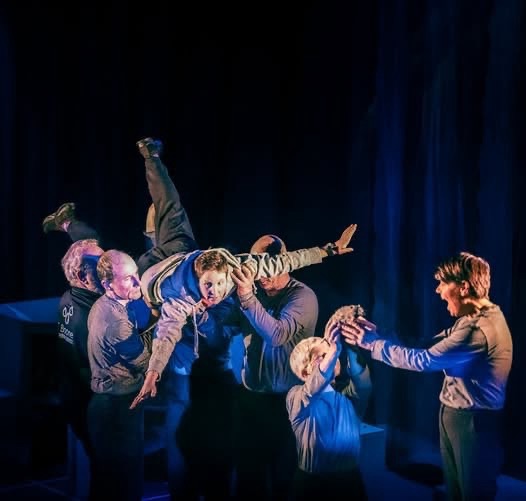
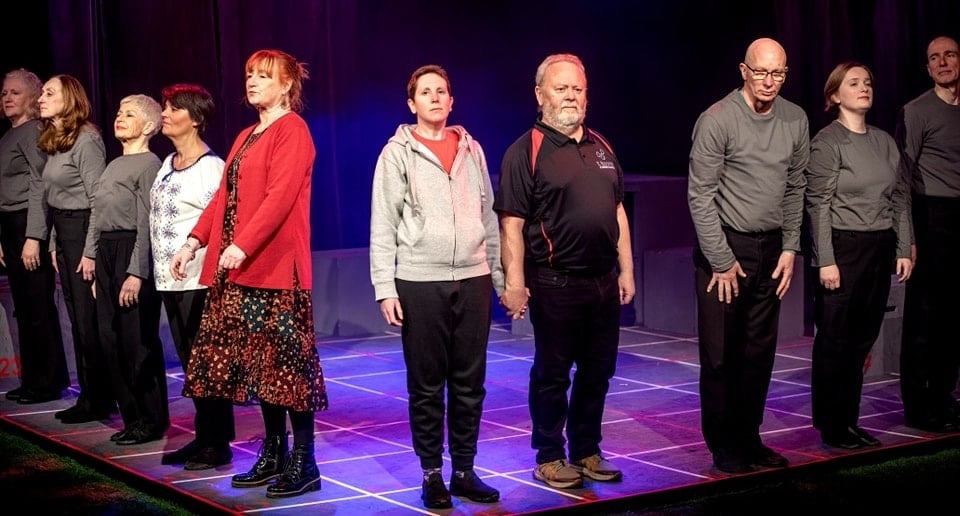
Peter Gale gave us a Mr Boone that was multi-layered and complex as we journeyed into the secret family history he had tried to cover up. Helen Reading narrated several key parts and played Siobhan, one of Christopher’s teachers with her usual confidence and flair. Ginny Orrey was a suitably irate and impassioned Mrs Shears, and the rest of the company ably filled in as an ensemble of characters as well as moving scenery and creating tableau’s around the story.
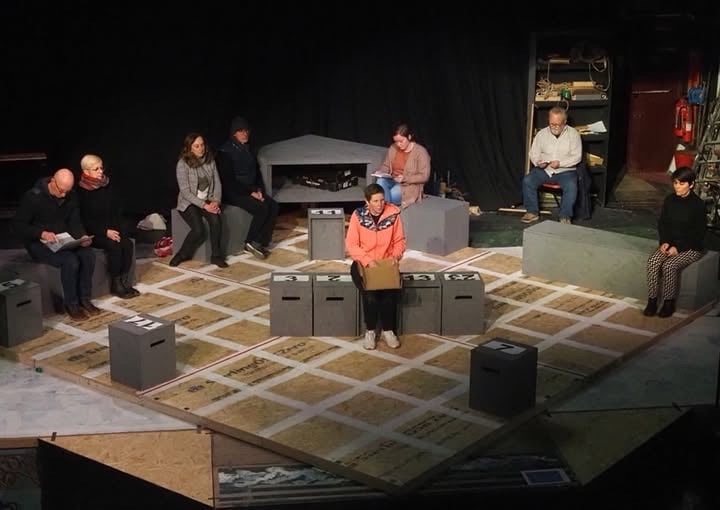
The staging was a superb recreation of the west end version, with numbers, squares and triangles marking out on the floor how Christopher saw the world around him, the use of tech was inventive with soundscapes and even included a scene with the whole company where Christopher flies in space with Toby, his rat. The Apollo really revelled in the sense of what theatre can show or imply, and special commendation must go to the director’s Amy and Dan Burns.
There was a slight background soundtrack issue throughout the show where I was sat that did, on occasion, take me out of what I was watching, but what was happening on stage was thoroughly engrossing, with a little more attention given to the multi-role performers to make their characters a little more distinct from each other, this could have been a professional show.
Despite the controversies around the source material, well done to the Apollo for opening up the debate on portraying these kinds of stories, and perhaps opening the door for non-neurotypical actors and stories to be told in the space. Well done also for the inclusion of a “relaxed” performance into their run to give more opportunities for other audiences to see this show.
Theatre is an important social tool that many still cannot access or enjoy. It is shows like this that start to bring these stories to a whole new audience. A well done to all involved.
Reviewed by Olly Fry
 IWtheatre