
I am used to walking out of a theatre after a good production humming a tune that featured in the show; thinking over the themes or mulling over what it has to say about life…I have rarely left a theatre as emotionally drained as I did after watching Iron. And that’s just as an audience member.
What a powerful piece of drama, and director Helen Reading rightly kept the set deceptively simple – a prison cell on one side, office on the other and table and chair for prison visiting centre front, all dominated by the prison bars which could be moved to indicate different spaces or the passage of time. This threw the emphasis of the piece exactly where it needed to be – on the actors’ performances.
Fay has been in prison for 25 years, convicted of murder. For all those years her only visitor has been her solicitor, until her daughter Josie asks for a visiting order. Through a series of meetings and conversations between the two women, occasionally interspersed with input from the two prison guards, we gradually unpeel the layers, of both the story of what happened 25 years before and the mental and emotional trauma of both characters.
Holly Squires’ prison guard Sheila is an interesting character in herself – we learn she is a single parent and feels betrayed and angry for allowing herself to get too close to Fay – Holly’s performance gives us an insight into both the professional life of the prison officer – her vigilant, dominant stance during prison visits is threatening – and the far more vulnerable human behind that officer.
Paul Gwinnett’s George is more experienced and ‘battle-hardened’ – or is he? We don’t get to see quite as much of him as a human and he keeps his distance from Fay, During visits he is constantly on the move, watching suspiciously – I have to say this movement did at times impact on my concentration on the interaction between the two main characters.
Amy Burns’ stage experience shone through in her role as Josie: at first, we assumed she had just taken the notion of visiting her mother because she was back in the UK after working abroad, and between jobs. Gradually though, we realised she needed something from her mother – but what? Approval? Love? To understand her past? To come to terms with the buried memories and emotions? Josie herself could not articulate what she needed, but all those things were buried deep within her and Amy skilfully brought them to the surface as the script required.
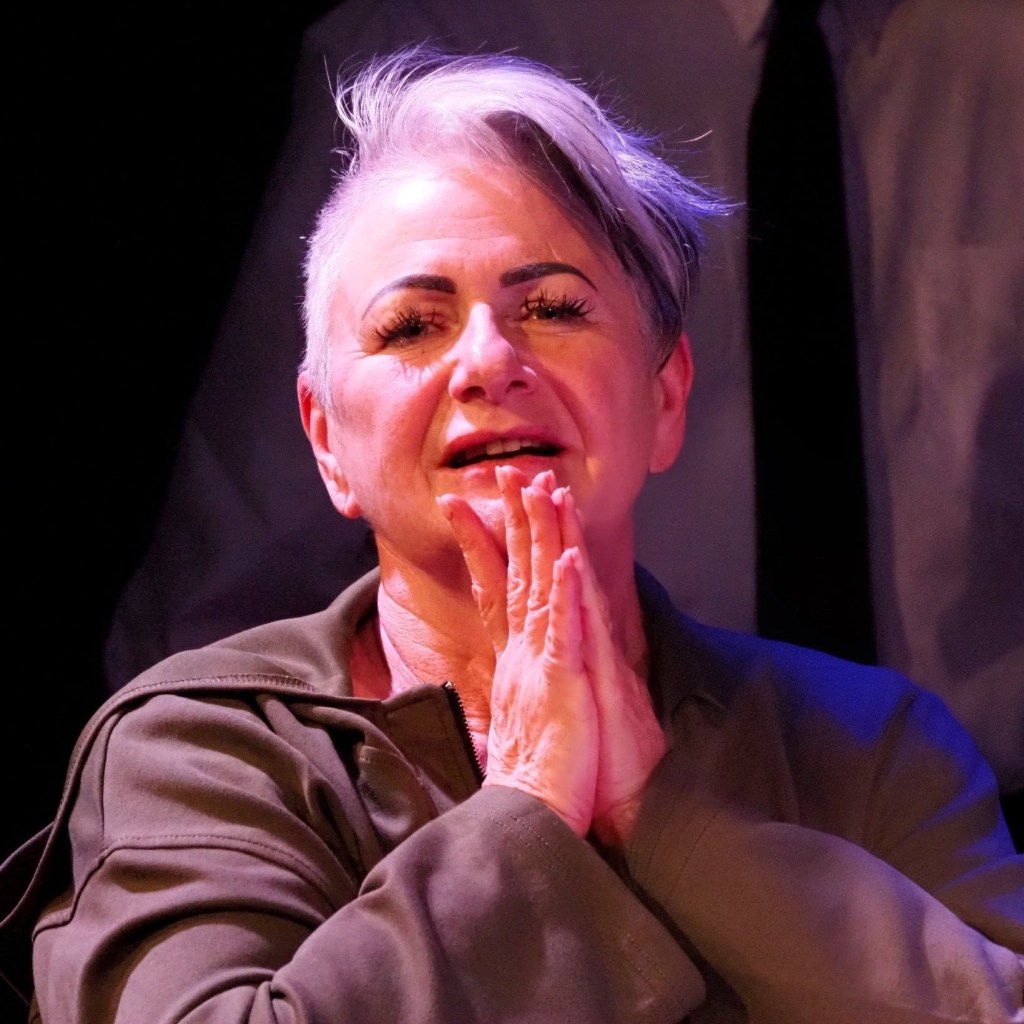
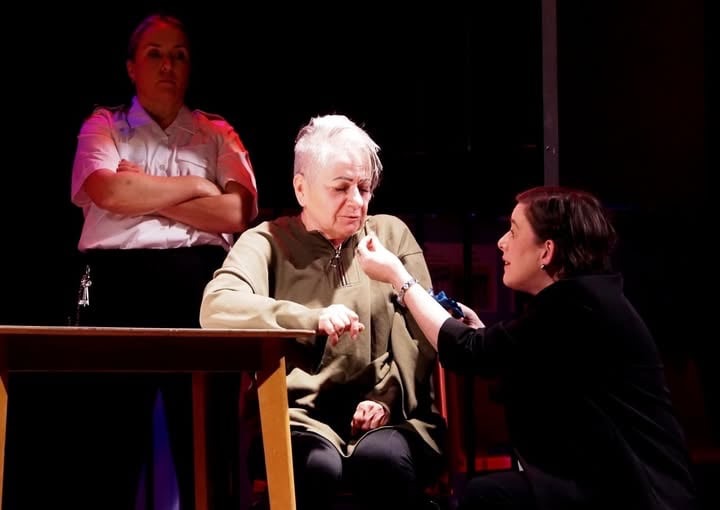
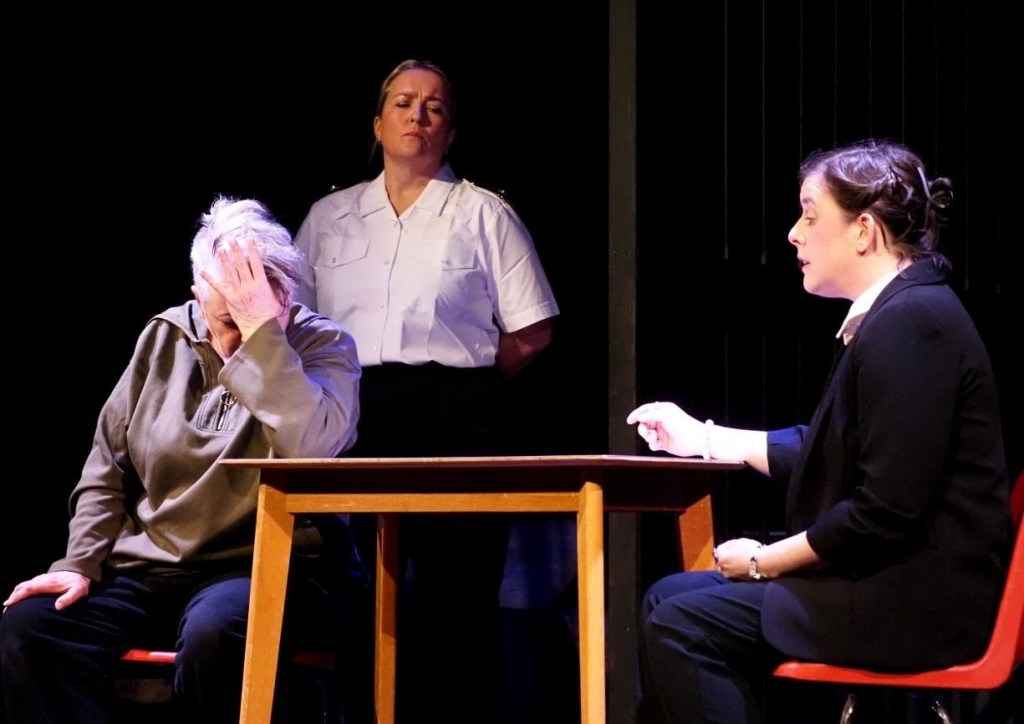
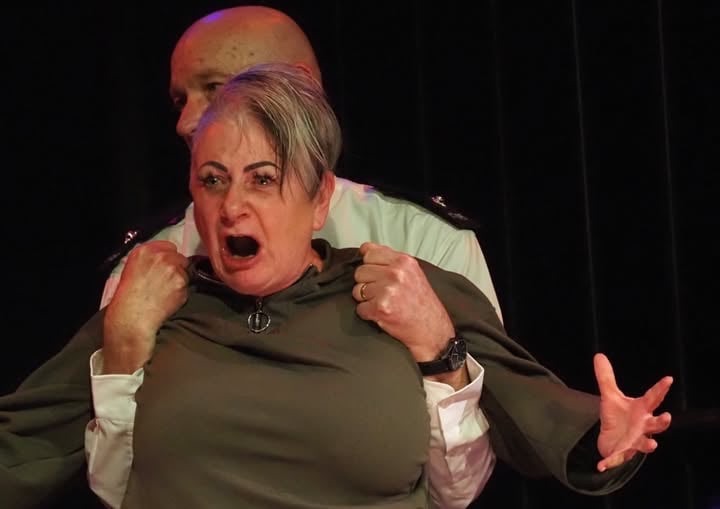
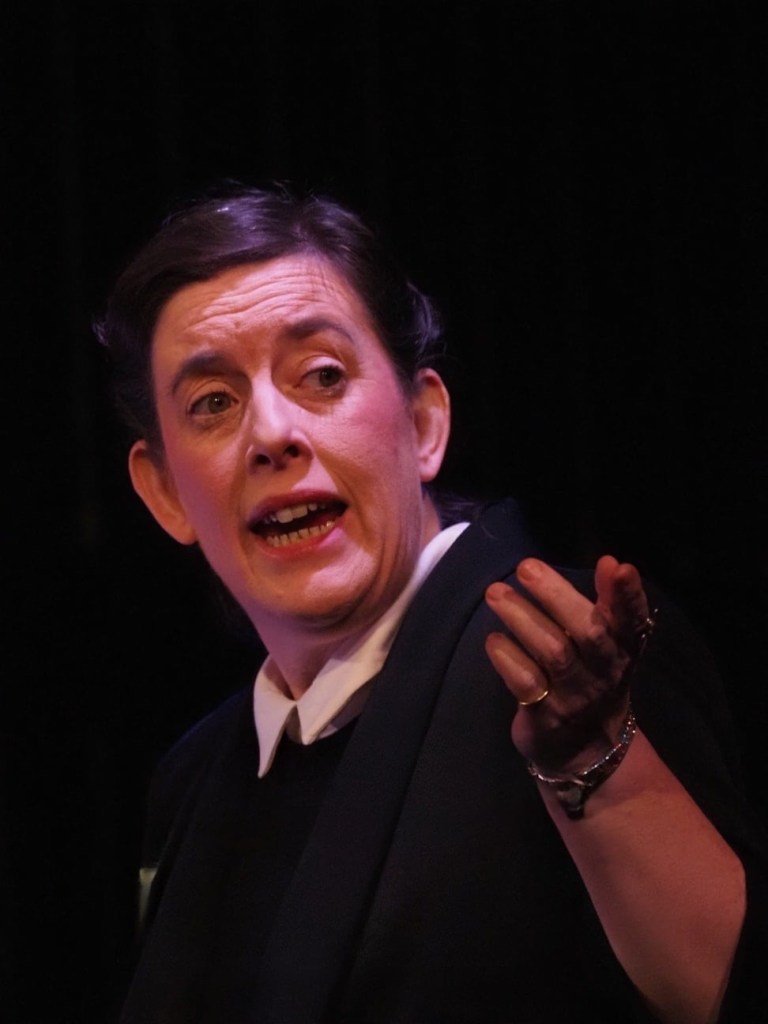
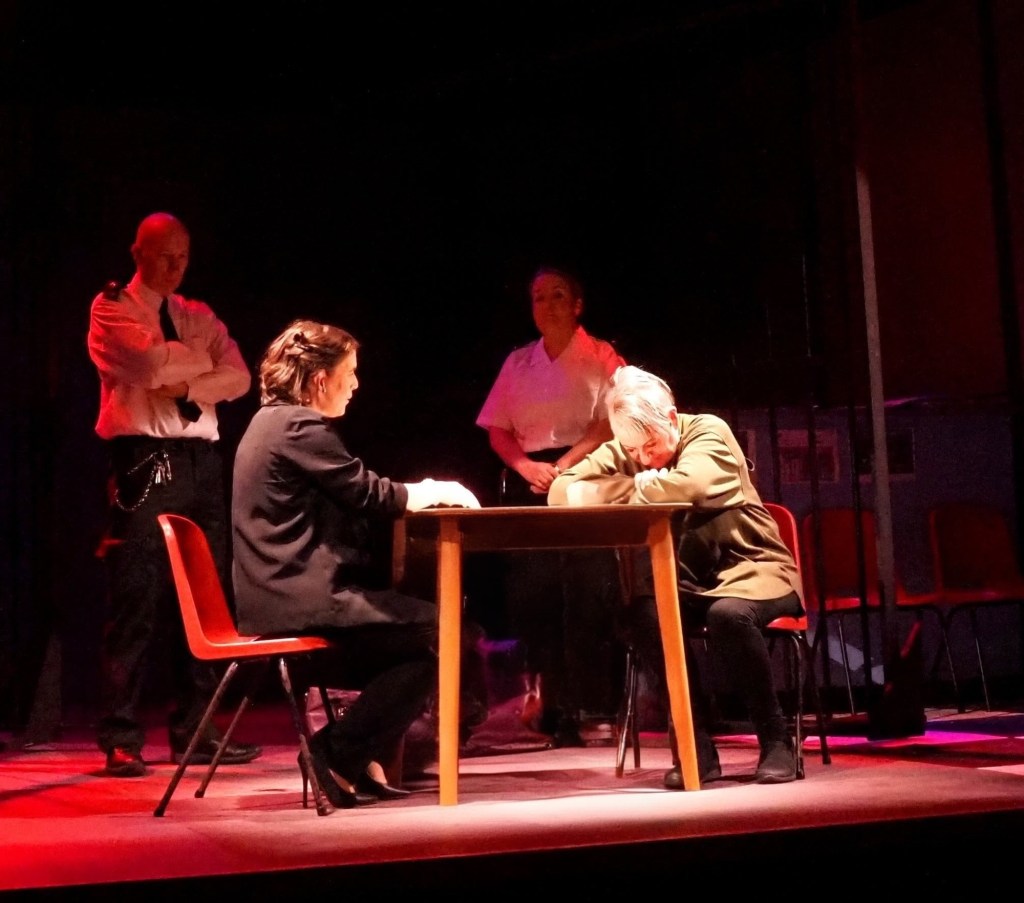
Fiona Gwinnett’s Fay however was in another league – a true tour de force. From the moment she defensively took her seat at the table, demanding to know why her daughter had decided to visit after 25 years, Fiona embodied every facet of Fay’s mental and emotional turmoil. Again, at the start this could be explained away by the effect prison has had on her, and her suspicion of her daughter’s motives was entirely understandable. As the visits progressed however, we began to see Fay’s own needs – she became by turns manipulative, demanding, frustrated, distressed, and angry. We saw her need to experience life outside the prison – the life she had known as a young woman – and her attempt to do this vicariously through her daughter.
Then, as layer after layer started to peel away, we saw her recall the past: nights out in the pub; how she met Josie’s father; happy memories of Josie’s childhood – which began to stir what was buried inside Josie herself. As each woman contributed her memories she sparked emotions and more memories in the other until, almost inescapably, the truth of what happened the night Josie’s father died were revealed. And the repercussions from that revelation made for a truly poignant ending.
Yes, we were left with questions. Yes, the play has so much to say about its theme. But more importantly, because of the powerful performances we witnessed, the audience had followed Fay on a deeply emotional journey and been given an insight into a psyche traumatised by a coercive, controlling partner and driven to the brink of sanity, and a woman who took the only way out she could see in that moment.
I respect the Apollo Players for bringing ‘Iron’ to the stage – it is a play that needs to be seen, and I shall remember it for a long time.

 IWtheatre